Showing posts with label Faith. Show all posts

Saturday, 1 September 2018

Four Gifts: A Review of April Yamasaki's Book on Self-Care


Something that saddens me is how little I read these days. Being a mom of two toddlers means that "free time" is a fairly foreign concept, and when I do have a few minutes to myself, those tend to be filled up with other things. At the moment I am getting ready to write and direct a play for my church, as well as continuing to work on my musical, blog, and other writing projects. I am still leading worship at least once a month at church, and I am running a Middle Earth RPG for a few friends once a week. I am trying to stay on top of the endless mountain of pears that the tree in our backyard is producing, and I am in the middle of canning season. And on top of all of this, I have been struggling with some sort of health problem that has been making me feel very tired—I can only work for a few hours at a time before I have to lie down! You might say that I could use a book on self-care right about now!

I have pretty much given up on reading novels during this stage of my life. When I'm reading a story, I tend to get really lost in it, and then I get grumpy when I'm interrupted or have to put it down... and with my life, that tends to happen every few minutes! But non-fiction books don't have the same effect on me, and when I read reflective, thoughtful books, sometimes I even find the interruptions help me to take a break and think about what I've read—so when I had a chance to read April Yamasaki's new book on self-care, I was pretty excited!

I've had the privilege of being a part of the launch team for April's book, Four Gifts, which has included being able to read an advance copy of the book, and I highly recommend it! April's writing is relatable and insightful. As I was reading it, I found myself continually caught between wanting to stop and reflect on what I had just read, and wanting to keep reading to find out what April had to say next! I am looking forward to having a solid copy of the book in my hands so I can sit down and read it again.


Four Gifts: Seeking Self-Care for Heart, Soul, Mind, and Strength by April Yamasaki


Since the book is called "Four Gifts", I thought that I would share four thoughts on it!

1. It is firmly grounded in a biblical perspective.

I have read several books on self-care over the past years, and this is really what makes April's book stand out for me! Not only are many of the principles and examples drawn directly from scripture, but April makes it clear that ultimately it is God who cares for us. As one of my favourite quotes from the book says:

"When all my self-care strategies fail, when I fail myself and others, when those closest to me have done their best yet still leave me wanting for more, God remains forever faithful."


2. April is not afraid to ask difficult questions.

For example, Jesus clearly taught his disciples that they needed to lay down their lives, deny themselves, and take up their cross (Mark 8:34-35). In Four Gifts, April comments:

"To live this abundant, self-giving life of following Jesus, self-care must also make room somehow for self-surrender. Can it be that we are called to both self-care and self-denial? Is that a healthy tension, a living paradox—or is it simply impossible?"

What I really appreciate is that April does not try to offer us a tidy solution or have all the answers. Instead, she invites us into the questions and the paradoxes, and helps us explore them for ourselves.


3. Four Gifts is very realistic about self-care.

While it's easy to think about self-care as curling up with a cup of tea or treating yourself to a massage, a lot of the time self-care is not fun and does not feel good. Self-care can mean being disciplined, even when we don't want to be. Self-care can mean learning when to say no and to set healthy boundaries, even if it is hard. Self-care can be learning to lament as we face areas of hurt and brokenness in our lives.


4. It is incredibly practical.

Four Gifts is interspersed with really great questions for thought and discussion, and each chapter concludes with simple and practical ideas for implementing the principles addressed in that chapter. This is one of the reasons that I want to read the book again—I really want to take the time to reflect thoughtfully on the questions, and to find ways of implementing some of the practical self-care suggestions! For example, have you ever heard of making an "I-don't-do" list? Basically, it's a list of things that help you maintain healthy boundaries in your life—anything from not drinking coffee after a certain time in the day, to not checking Facebook first thing in the morning, to not trying to please everybody. I think that making an "I-don't-do" list sounds like a very helpful exercise!


To conclude my review, here is a short question and answer with April Yamasaki:

Why do we need self-care?
Because too many of us are over-tired, over-extended, and overwhelmed by our lives—the constant barrage of information, the multiple demands of personal, family, work, community, and world needs, the relentless advance of technology. Self-care allows us to rest instead of constantly running the treadmill of our lives. At its best, it can help restore a sense of wholeness in a world that seems increasingly fragmented and polarized.

What do you mean by self-care “at its best”?
Well, at its worst, I think self-care can become selfish and self-indulgent as some critics point out. That can happen when I focus on my own needs to the exclusion of others. But at its best, self-care means that I care for myself without ignoring or isolating myself from the needs of others. Genuine self-care includes a mutual caring in community. It includes a sense of my own limits where instead of the self-sufficiency of self-care, I can depend on the all-sufficiency of God’s care.

What do you hope for your readers? 
I hope readers will come away with a bigger vision for self-care that also embraces caring for others and surrendering to God’s care and call in their lives. I hope they’ll think deeply about their core commitments and priorities for themselves, and discuss these with their family, friends, and others. I hope that my words would come to life in their own thinking and experience, that readers would expand upon the book for their own personal situation and context.

Four Gifts: Seeking Self-Care for Heart, Soul, Mind, and Strength will be available starting September 4, 2018. You can find out more about Four Gifts and April Yamasaki's writing on her website: aprilyamasaki.com

Wednesday, 7 March 2018

El Roi: The God Who Sees Me

For Lent this year, our church put together a devotional focused on different names of Jesus. The members of our church were invited to submit a devotional, poem, art piece, or other original work to be a part of it. I wrote a devotional, and I thought I would share it here as well.
____

El Roi: The God Who Sees Me

Genesis 16 tells the story of how Hagar became pregnant with Ishmael, was mistreated by Sarai, and ran away into the wilderness. The angel of the Lord met her there and gave her a promise about her child. At the end of that encounter Hagar gave God the name, "The God who sees me". We might not expect God to see a rejected, runaway slave girl, but he did.

When we look at the life of Jesus, we see a beautiful picture of what it looks like when "the God who sees" walks on the earth. He sees the Samaritan woman (John 4), he sees the bleeding woman (Luke 8), he sees Zacchaeus (Luke 19), and the list could go on and on. Jesus saw and reached out to the outcasts, the unclean, the sinners, and all those who were rejected by society.

Today, our God is still the God who sees. He is the God who sees the marginalized, the oppressed, the forgotten. He is the God who sees everyone. He is the God who sees us. We all go through times and seasons when we feel very alone. Maybe it is because of a loss or traumatic event. Maybe it is because of mental or physical illness. Maybe it is from being a parent of young children or the caretaker for someone with special needs. Maybe it is something else. We may feel invisible, overlooked, ignored, forgotten. But God sees us. He reaches out to us in our wilderness, even as he reached out to Hagar so long ago.

As Jesus-followers, we are also called to be people who see. Seeing is hard. It means slowing down, looking away from the things that engross our attention and fill our busy lives, and instead starting to notice those who go unnoticed. Being like Jesus means seeing the homeless, the refugees, the victims of racism, abuse, and colonialism, the troubled youth on the street corner and the elderly person in palliative care, and all those in between who are rejected and forgotten by the world.

But seeing is not just about looking. True seeing leads to meaningful action. God provided for Hagar. Jesus stopped, and talked, and touched. If we are going to be like our Father Who Sees, then we need to be ready to do something about what we see.

Personal Reflection:
When was a time that you knew beyond a doubt that God sees you? What makes you feel seen?

A Challenge:
Today, try to "see". Slow down and notice the people you wouldn't usually notice. Then do something about what you see. Give a smile, a hug, a helping hand.

Father, thank you that you are the God who sees us. Thank you for being with us, even in the dark and challenging times when we feel alone and forgotten. Help us to be people who see and who show your love to a broken and hurting world. Amen.

Tuesday, 31 October 2017

An Ordinary Nail

October 31, 1517. The day that is known as the day on which Martin Luther nailed his ninety-five theses to the door of the Wittenberg Cathedral.

I imagine he used an ordinary nail.

This wasn't the first time he'd had a problem with something going on in the church of that time, and this wasn't the first time he had written about it. He had no idea that this time the effect of his words would be felt across the world, and that his action would be remembered and celebrated five hundred years later.

Interestingly, Luther wasn't intending to break away from the church. He was simply making a critique and calling for a change. But his document caused such a stir that the powers of the time told him that he needed to recant his words, or else. In the end he broke away from the Cathodic Church, and his actions are often proclaimed as the start of the Protestant Reformation.

Luther's actions and words clearly made a significant impact on history, but he was not the first one to make those critiques of the Catholic Church. The way was already paved by others. The Protestant Reformation, though so often attributed to Luther's initiative, was actually the result of countless choices and countless actions by countless people. Did any one of those people know the significance of their actions?

For example, roughly eighty years before Luther's ninety-five theses, Johannes Gutenberg invented the printing press. This played a huge role in setting the stage for the Reformation to happen. The Bible, which before had to be copied by hand, suddenly became accessible to more than just the very rich. And as soon as the Bible was translated into the language of the people, instead of only being in Latin, that too became accessible in a way that would have been impossible before. The printing press also made it possible to distribute other written works further and quicker than ever before - works such as Luther's ninety-five theses.

There are countless others who contributed to the Protestant movement, both before and after Luther. Some helped, some hindered. They often disagreed with each other. There were acts of great faith and heroism, and despicable acts that we cringe to have associated with the history of our faith. The Catholics persecuted the Protestants, the Protestants persecuted the Catholics, the Protestants and the Catholics both persecuted the Anabaptists. The history of the Reformation is not necessarily bedtime story material. But it is full of ordinary people, like us, saying things and doing things.

Like the people of history, we do things and we say things. We call up a friend, say hi to someone we pass on the street, write a blog post, live our lives. We don't know the impact that it will have, seen or unseen. That's a little bit scary, because so often our actions and words are thoughtless and careless. But it is also encouraging, because if you're like me, you'd really like to change the world and make it a better place, and sometimes it seems like you have to nail the right document on the right door at the right time in order to make that difference, but that's not true. The things we do and say may not be specifically remembered years later, but the ripple of effects coming from our normal every-day lives and decisions will continue to spread and make a real difference in the world.

500 years ago, Luther used an ordinary nail, and history was never the same.

Friday, 15 September 2017

Mother

Gentle arms embrace
Reassuring presence
Banishes nightmares back into
The dream world, untouchable
Haven of safety
This lap, these arms
Bathed in warm light pushing
Back the darkness and fear
The old couch
Worn, but oh so
Comfortable, that is how
I remember it,
Legs curled up inside
Flannel nightie
A soft lullaby
Sends me back
To sleep.

Mine the arms now
Grown larger to embrace
These smaller ones
My lips now give
Healing kisses
And sing lullabies.
I hold my sleeping child
Soft breathing in
My ear, my heart
Overflowing
Still cold fear wraps
Its cord around
My heart, I know
My lips are not
Magic, my presence alone
Cannot banish all pain
The world is so much
Bigger, and scarier
Than I thought.
And so I crawl
Into the lap
That is bigger than mine
Held by arms that
Truly banish fear and pain
Never letting go
My fear is stilled
I sleep.

Tuesday, 4 July 2017

Down to Size

Reaching their branches up into the sky
Swaying softly in the breeze that blows by
No fear about food or how they will be clad
Greeting each day, both the good and the bad.
What do the trees know that we do not know?
Whatever our past, it's by God's grace we grow.

Go outside, lift up your eyes,
Let the trees shrink your worries
Down to size.


Unchanged by the seasons, unmoved by the storm
They were still there long before you were born.
Faithful and steady whatever befall,
Safety and shelter for both big and small.
What say the mountains that we cannot hear?
God's love will not change, so there's nothing to fear.

Go outside, lift up your eyes,
Let the mountains shrink your worries
Down to size


Innumerable pinpoints of raw, intense flame,
God made every one and he knows them by name.
Even when they are concealed from our sight
Still they shine bright in the darkest of night.
What is the song that the stars ever sing?
When all hope is gone, know our God is still King.

Go outside, lift up your eyes,
Let the stars shrink your worries
Down to size.

Wednesday, 24 May 2017

Fear, Your Day Is Over

Fear, your day is over.
I have listened long enough
To your whispers and lies
That seek to paralyze and haunt me.

I used to be your plaything
Caught in your icy grip
Drowning in waves of terror
You had your fun
As each new fear
Tightened your chains.

You thought I was yours
But your pride was your downfall
For you pulled the chains too tight
And I recognized you for who you are
And remembered
I know the one who has the key.

Fear, I know your little game now
Every time you stole my imagination
Filling it with endless things
That could go wrong
You piled calamity upon calamity
I died a thousand deaths
But you could not touch me
What would you have me fear now?
You have said it all before.

There's no reason for me to fear you
Or listen to your whispered lies
You do not define me
I live in the house of love
I belong to the Prince of Peace
Fear, your day is over
I am free.

Tuesday, 25 April 2017

Meditation on John 10:1-15

A sheep am I:
Small and vulnerable
Stubborn and willful
Sometimes a bit silly
A sheep am I.

A shepherd is he:
Strong and protective
Firm and gentle
Compassionate and caring
A shepherd is he.

Protected am I:
Watched and guarded
Led and provided for
Loved sacrificially
Protected am I.

Known is he:
The door to safety
The wall around me
The voice I trust
Known is he.

He calls my name,
And I follow.

Monday, 17 April 2017

Just the Beginning


This is the end
Buried in the ground
Surrounded by darkness
Lost and alone
But wait
A stirring
Deep within
A whisper of hope
Growing
Swelling
Bursting
Exploding
This is just the beginning


The inspiration for this piece came from my garden. As I was planting the first seeds of spring, I began reflecting on what that experience would be like for a seed. It must feel like the end, buried, alone in the darkness. But instead, new life begins to stir within, and that stirring grows and swells until the seed is ready to burst. What would that feel like? Perhaps like a wild hope rising within it, as C.S.Lewis has said. I think that experience would be very similar to what it must have been like for the disciples on that first Easter: Certain that it is the end, but then suddenly, beyond hope, the whisper that there may still be more to come.  A “burning heart” within them. And in our lives too we sometimes feel like that seed. We feel trapped, alone, buried, forgotten. But one day hope begins to whisper into our hearts, and suddenly our whole lives are transformed.

Tuesday, 14 February 2017

The Power of Words

In a devotional that I have been reading, the author challenged her readers to say, "I trust you, Jesus," frequently throughout their day, especially when feeling frustrated or overwhelmed. I dismissed it as sounding rather contrived and tacky, but for some reason the idea stuck with me. The next time I was feeling stressed because the kids were acting up, the thought came into my mind, "I should say, 'I trust you, Jesus'". So I did. And to my surprise, it helped!

Since then I have been saying that phrase fairly frequently, and I've also been thinking about why it is so helpful. One reason that keeps coming to mind is that words are very powerful. We tend to forget this, but it's true. We can see evidence of it all around us. A genuine encouragement can inspire someone to achieve far more than they thought they could. An careless insult can eat away at someone for years. I know I've seen those kinds of effects in my life, and I'm sure you have too.

When I say, "I trust you, Jesus," I am reminding myself about Jesus. It's funny how we can so easily go through our day without an awareness of Jesus - his presence, his love, his forgiveness, his power. I am also reminding myself that I have a relationship with him, and that he has promised to never leave me. I am declaring to myself, to him, and to the world that he is my saver, my sustainer, and my hope. When I say that phrase, I am also changing my focus and my perspective. I am taking my attention off my problems and stress, and directly inviting Jesus to be a part of whatever situation I find myself in. And that changes the reality of my moment.

The power of words even goes beyond whether or not we open our mouths to say something. Our thoughts are words too, and how we think (our "internal dialogue") can have a huge affect on us. It can turn a problem into an opportunity and a hard day into a day to be thankful for.

I'm not saying that we need to just "think positive" all the time. But I do want to challenge myself to carefully consider the kinds of thought patterns I have. When I'm feeling lonely, it's not very helpful to keep telling myself, "No one likes me. I don't have any friends." Instead maybe I should say, "I feel lonely. I should find a way to connect with someone." When I'm feeling stressed, instead of thinking, "I can't deal with this!", I can remind myself that Jesus is with me. One way of thinking traps me; the other gives room for hope.

The words we choose to use can have far more of an impact than we realize. In the way that I talk to others and talk to myself, I want to be the kind of person that uses the power of words for good.

Tuesday, 13 December 2016

Meditation on John 9:25

One Thing I Know

I don't know where I'll be in five years time,
Or what will happen next week.
I don't know what tomorrow will bring,
But there is one thing I know.

I don't know who my children will grow up to be,
Or how to equip them to face the world.
I don't know how to get my toddler to stay in bed,
But there is one thing I know.

I don't know the story of the homeless man on the corner,
Or why that famous person committed suicide.
I don't know the pain of those living with mental illness,
But there is one thing I know.

I don't know how to end war and violence,
Or stop the way we are harming the earth.
I don't know how I can change the world,
But there is one thing I know.

I was blind,
Now I see.


"He then answered, 'Whether He is a sinner, I do not know; one thing I do know, that though I was blind, now I see.'"

Tuesday, 15 November 2016

Heroes Of The Faith And Me


As a child I loved reading biographies of famous Christian "heroes of the faith".  I was inspired and encouraged in my faith through the stories of people like St. Francis of Assisi, Eric Liddell, Mother Teresa, and Jim Elliot.  One person I particularly enjoyed reading about was George Muller.  He is known for starting orphanages in Bristol, England in the 1800's.  The most distinctive thing about his work is that he never asked for money.  Instead he prayed for whatever needs he had.  And God always provided, sometimes in very miraculous ways.

I always wanted to have that kind of faith in God.

The problem is, trusting God seems a lot easier in theory and in stories than it is in the day to day challenges of life.  It's easy to look back and say, "Of course God was going to provide food for all those orphans!" and think that that faith must have come easy to Muller.

In my own life, faith is a struggle.  I believe that God provides, but when it's my own credit card bill, I'm not quite so sure.  I know we're supposed to "look at the birds of the air" (Matthew 6:25-34), but somehow it's easier to believe that God provides for the birds than that he provides for my next month's rent.

I think part of the reason why this is so hard for us is that most of us in western cultures have so much.  If we're hungry we just go to the store and buy food.  If we need more money we work overtime.  It becomes easy to believe that we are the ones who are providing for ourselves.  We forget that ultimately God is the one who is providing for us, and that he will continue to provide for us, even if we lose the jobs, health, government, etc. that we thought were protecting us.

I'm learning that growing in faith is kind of like a building muscle or forming a new habit.  It's really hard, especially when we aren't used to it.  But as we see God provide and answer our prayers, it gradually becomes easier to trust him.  Does it ever become truly easy though?  I don't know, because I've never gotten there.

But I am learning and growing in my faith.  Every time I see God provide for me, it reminds me to trust him more next time.  It is his goodness and care that brings us through every day and every challenge that we face.

Thursday, 27 October 2016

Thankful Thursday

With all the sleep deprivation of a young mom, it's easy to feel depressed and discouraged.  But instead of complaining or mulling over everything that's wrong, today I thought I'd share 5 things that I'm thankful for!

God's Presence:


Too often I try to get through the day on my own strength, but when I slow down and turn my thoughts toward Jesus and rely on him, I'm reminded of what is really important, and I start having a better attitude.

My Husband:


For better or worse, we're in this together, and I'm so thankful to be part of a team.  He challenges me to be better and to keep pursuing my goals and dreams.  He's my primary connection to the illusive world of "adult conversations", and he's a fantastic dad.  I couldn't ask for anyone better!

This Blog:


Somehow, through all of the busy days and sleepless nights, I have still been able to continue writing on this blog.  It's really the only thing I consistently do for myself, just because I want to do it.  I don't even manage to shower consistently, so that tells you how big of a feat that is!  Having a place to express myself and develop more of my skills has helped keep me sane.

Hot Chocolate:


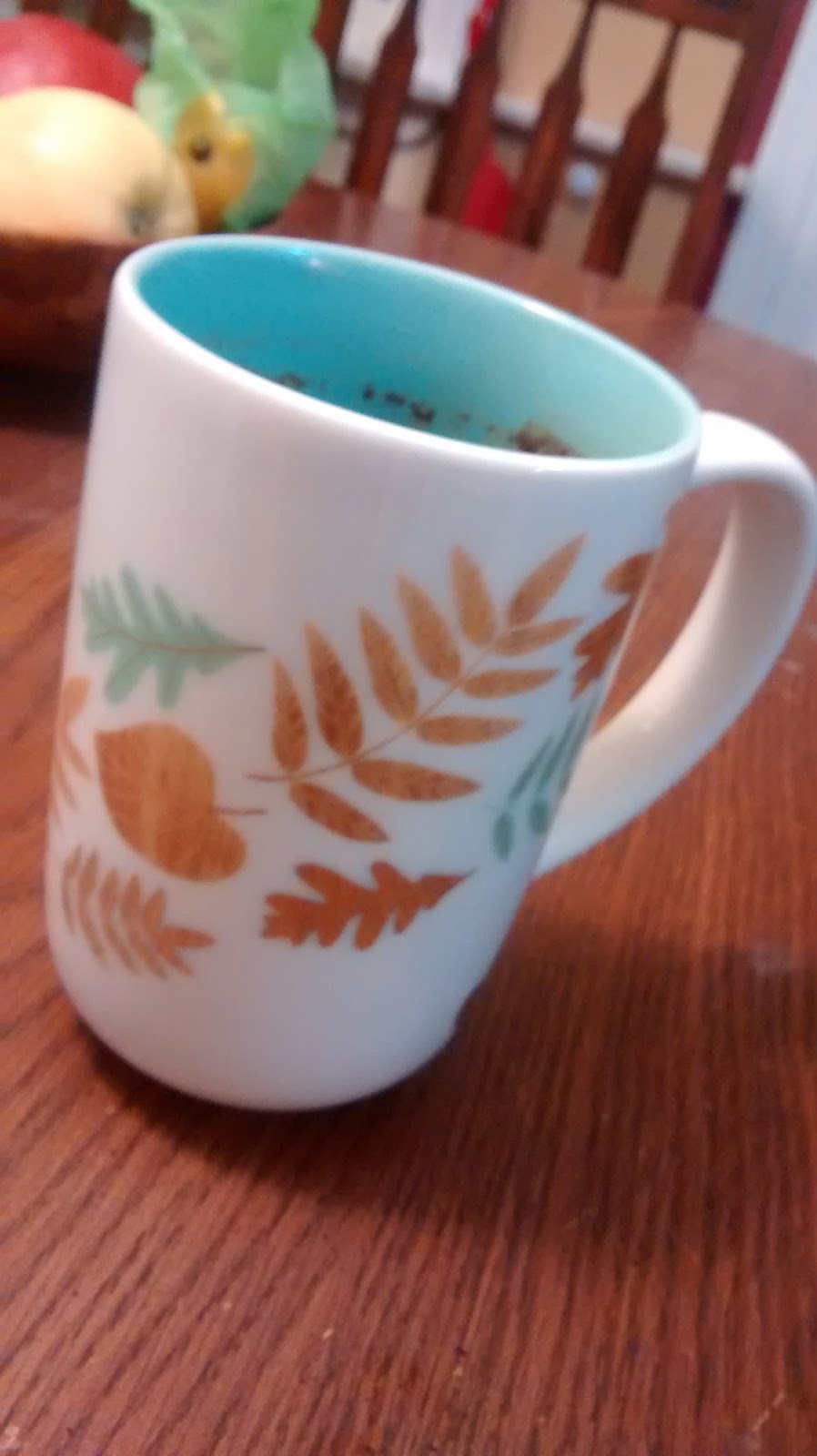
I may not be a coffee drinker, but I sure have been drinking lots of hot cocoa lately....  Also, having pretty mugs to drink it out of makes me happy too!

These Faces:


No matter how exhausting and challenging it is, being mom to these two incredible boys has been completely life changing. I love them to the moon and back, and wouldn't change my job for anything!

Friday, 2 September 2016

Weakness

Weakness.

It's not something that we like very much. 

We forgive its existence in things that are cute and little, like kittens and babies, but for the most part we look on weakness with a mix of condescension and pity.  Most of all, we can't stand weakness in ourselves.

And it's not surprising.  Everywhere around us it is strength that is praised.  The people who can run the fastest and jump the farthest receive medals and fame.  Those who keep their chin up when life gets tough are inspirational.  The message is clear - don't falter, don't cry, and don't ever ask for help.

Even within the church, strength is placed on a pedestal.  We look up to those great saints who faced impossible odds, who were unshakable in their faith, who faced suffering and persecution with joy and hope.  We aspire to be like them.  We want to be strong in our faith.

I'm weak.

That isn't something that I want as a part of my self-concept.  For most of my life, I would have labeled myself more as "competent", "resourceful", and "talented"... not "weak".  But lately I haven't been able to ignore my weakness.  Most of the summer I've been barely surviving.  My daily tasks were overwhelming, and I felt increasingly exhausted, depressed, and alone.

I don't like feeling weak.

But a couple of days ago I read something that really encouraged me.  I've been sporadically meandering my way through the devotional Jesus Calling by Sarah Young, and the entry for the last day of August was about weakness.  The author writes that God has gifted some with abundant strength, and gifted some with weakness.  Now, weakness isn't exactly the sort of gift that I'd add to my Christmas list, but I was challenged to look at it in a different way, looking for the blessings that come with weakness, rather than the challenges.

Weakness makes me rely on God.  It keeps me aware of my need for him and his presence in each day.  When I'm feeling strong and capable, it's so easy to breeze through my day, doing things my way, without a second thought.  Weakness keeps me coming back to God, asking for his help, and trying to follow his priorities for the day.

Weakness also makes me rely on others.  We are not meant to go through life on our own, but nothing makes that more obvious to me than when I feel weak.  It is because of other people helping me that I made it through this summer.  And it's because of others that I am coping with life right now.  Last week Steven and I both came down with colds.  Trying to care for a sick toddler, while being sick myself, on top of being 39 weeks pregnant and already not coping with life... let's just say it was a recipe for disaster.  But I'm not alone.  I've had so much help this week (especially from my mom and Maria - thank you!) that I am actually feeling more alive than I have in a long time.  When I wake up in the mornings I'm not feeling exhausted, and I actually have a desire to do things and care about things again.

It is hard, and very humbling, to have to ask for help.  We have to fight through the lies that tell us that being weak is bad, that feeling weak means that we are failing.  My friends, it's not true.  Weakness is not failure.  Weakness is a part of being human.  And weakness can lead us to what we need most in life - dependence on our God who loves us, and his presence through the people who are there for us when we need them.

Tuesday, 26 July 2016

Spiders

I never liked spiders.

They are creepy and icky and nasty.

I feel like my response to spiders is fairly average.  If I notice one in its natural habitat (outside), I avoid it, keep my distance, or maybe use a stick to knock its web down if it's in my way.  But if the spider has invaded my space (inside), their demise is imminent.  If I'm feeling brave or if it's a particularly small spider, I'll deal with it myself with a tissue.  If it's of any decent size or if I'm just not feeling up for it, the appearance of the spider is meet with cries for assistance from whoever may be within earshot, particularly if there are any males in the house.

There was one particular occasion of note when I was able to coexist with a spider.  In the house where I grew up there was once a spider that built its web in the bathroom.  Since it wasn't too big, I tried to dispose of it myself, but it escaped into the crack between the counter and the wall.  This distressed me, since the only thing worse than seeing a spider is knowing that there is one nearby that you can't see anymore.  But there was nothing I could do.  The spider later rebuilt its web, but once again escaped my attempts to rid myself of its presence.  There was only one thing left that I could think of to do.  I named the spider.  Its name was Mr. Creepy, and we had an uneasy truce until Mr. Creepy disappeared a couple weeks later and was never seen again.

Fast forward many years to when Jesse and I were moving into our new house.  Well, new to us.  It's actually a very old house.  It has a lot of character, and it is already feeling like home, but one of the first thoughts I had when I saw it was that it was the kind of house that would have a lot of spiders.  I was right.  It doesn't help that it wasn't lived in for many months before we moved in, and it also doesn't help that none of the windows have screens, so if we want to let in any fresh air or try to cool things down in the evenings (it gets so hot upstairs when it's a sunny day!) we also end up letting in a lot of little critters too.

Our first few weeks in the new house involved my usual attitude of "death to all spiders", but something was brewing in the back of my mind.  You see, I don't particularly like killing things.  I'm not a vegetarian, but I have been struggling with the concept of animals being raised purely to be killed.  And I certainly don't support meat animals being raised in inhumane conditions like they so often are.  I also don't agree with animals being killed needlessly or for sport.

The problem with this was becoming evident: Where do you draw the line?  At what point is the creature small enough that its life doesn't matter anymore?  Why was I picking and choosing what was ok to kill and what wasn't?  I'd be very sad to crush a bumblebee or a ladybug, but why did I consider killing spiders to be ok just because they are ugly and scary?  It's still something I think about a lot.

So I decided to change something.  I stopped killing the spiders.  Some of the nastier ones I trapped and set loose outside, but others I just let be.  And a strange thing happened.  They aren't as scary now.  It's true, I still don't particularly like spiders.  I still think they are creepy and ugly.  But I don't freak out whenever I see one.  I don't automatically think that I have to kill it.  I have found that we can coexist.

I think that this is about something bigger than just spiders.  There is a lot of fear and hatred in our world.  Yes, people fear and hate spiders, but even more tragically, people fear and hate other people.  We fear those who are different than us, we feel threatened by their presence, and so we kill them.  Sometimes the killing is literal.  But for most of us it's much more subtle.  We kill their character, we gossip and slander, we label them and ostracize them, we deny our common humanity and forget that they are unique people, with their own story, made in the image of God.

The tragedy is that fear is a self-perpetuating cycle.  When we act in fear we reinforce that fear and make it even stronger.  Just as fearing spiders led me to kill spiders, which made me fear spiders even more, when we kill others (literally or figuratively) we become even more afraid of them and the cycle of fear and violence continues.

To stop the cycle, we have to stop acting in fear.  We have to stop supporting violence.  Violence can never cure fear, it will only promote it.  I know, it's hard not to act out of fear.  Fear is a natural response to danger that's designed to keep us safe.  But it becomes a problem when we are afraid of the wrong things, and when we respond to that fear with violence.  God has not called us to be a people of fear, but a people of love, like Jesus risking everything to welcome those who society fears and rejects and kills.

It's not an easy calling, to follow our Prince of Peace, but lately I have been encouraged.  I didn't expect to ever coexist with spiders, or have anything other than hatred for them.  Yet, all I did was stop killing them, and the change happened on its own.

Let's stop responding to our fear with violence, and perhaps together we can change the cycle of fear, hatred, and violence that we see in the world around us.

Tuesday, 31 May 2016

Lessons from a Baby: Abundance

Not to brag about my kid, but he amazes me with his generosity. He always wants to share. Whether it's a cup of water, a toy, or a small handful of coveted chocolate chips, he loves offering some to whoever happens to be around.  The funny thing is, I never consciously tried to teach him to share.  We do share things with him, so he sees our example, but I think that there is another factor that also encourages him to be generous - he believes that there is plenty for everybody.

In contrast, our whole culture is structured around the idea of scarcity.  Deep down, we don't believe there is enough for everybody.  So we horde our money, we buy more than we need, we keep to ourselves because we're afraid.  If we are too generous we might not have enough for ourselves.  If we run out of what we need there won't be any more for us when we need it.  The message all around us is subtle but strong - take what you can, because there isn't enough.

But Steven hasn't learned that yet.  As far as he is concerned, there is never-ending abundance.  His cup can always be refilled, his toy basket is always full of toys, and there is always enough to eat, even of special treats like chocolate chips.

I hope that he never learns scarcity.

You see, I believe that scarcity is a lie.  Of course, there are limited resources in the world, and we need to respect that and use those resources wisely.  But the message of scarcity is that we need to grab whatever we can for ourselves, without regard for the earth or anyone else around us.  It promotes selfishness and greed.  The sad thing is, it's kind of a self-fulfilling prophecy, because there certainly isn't enough for everyone to be living like that!  But ultimately, it is a perspective that is rooted in fear.  We believe that we are alone in the world, and that there is no one looking out for us but ourselves.

But our God is not a God of scarcity - he is a God of abundance!  He provides all that we need, and more.  We aren't supposed to worry about how we will live, since God knows what we need and he provides for us (Check out Matthew 6:25-34).

I know that many would protest, "But what if he doesn't provide?  Look at these different situations.  That doesn't look like God providing!"  I know.  I see those situations too.  But here are a couple thoughts.  In North America, it is very rare to actually be without physical necessities.  But because we are surrounded by so much, it is easy for our definition of what we "need" to become warped.  A lot of what we feel like we need may be things that are nice to have, but aren't actually things that we truly need.

Also, while God can and does provide in miraculous ways, even today, often his ways of providing are much more commonplace.  For example, God provides for us through others.  We are not alone.  God designed us to live in community, surrounded by family and friends.  And it is often through those around us that God provides for us.  But because of our scarcity mindset, we are often hesitant to give up what we have, which can mean that someone else is going without.  Our very fear of lack can be what causes lack for others, promoting a cycle of fear and selfishness.  But that is not the life that our abundant God has called us to!

Yes, there are places and situations in the world where people struggle to get what they need to survive, but for most of us that is not the case.  We have more than enough.  But we have to choose whether to have a mindset of abundance or scarcity.  With Steven, let's live lives of abundance and share what we have been given - even the chocolate chips.

Tuesday, 16 February 2016

Meditation on John 8:31-33

        So Jesus said to the Jews who had believed in him, "If you abide 
        in my word, you are truly my disciples, and you will know the 
        truth, and the truth will set you free." They answered him,
        "We are offspring of Abraham and have never been enslaved 
        to anyone. How is it that you say, 'You will become free'?"
                - John 8:31-33

Jesus calls:
Abide.
Listen.
Remain in my word.
Rest.
Live.
Be set free.

But Jesus,
We are Christians.
We are not enslaved by anything.
We don't need to be set free.
It's a good thing too,
Because we don't really have time for abiding.
We're too busy, you see.
Working two jobs,
Overtime whenever we can get it.
Gotta pay our bills you know,
No one else is going to do it for us.
And we're not really interested in listening.
To be honest, we never really hear you, Jesus.
The Christian radio station we listen to in the car is encouraging enough.
The tv show playing in the background at home keeps us entertained.
We keep our headphones plugged in when we're out and about.
Silence is just uncomfortable anyways.
And we don't really read your word.
It's all just full of things we've heard before,
Or things we don't understand.
We just don't have the energy or focus to get anything more out of it.
When we're done a long day of work we just want some easy entertainment.
Surely you understand that, Jesus.
And is that some sort of joke, talking about rest?
You already heard about how much we work.
We volunteer at church and at school.
The kids need to be in sports and dance and gymnastics and church club.
We have so many travel plans, just as soon as we can afford them.
We'll rest when we're dead.
And Jesus, we ARE living.
Just look at us.
We're being promoted at work.
Everyone calls us successful.
We just bought a new car, a better house, a bigger tv.
We get so many likes on Facebook and Twitter and Instagram.

Why do you say we need to "be set free"?

Tuesday, 9 February 2016

A Quote for Today

I happened to notice that today we are halfway between Christmas and Easter!  So I thought I would share this quote with you.  Sometimes it is easy to feel tired and discouraged, but Jesus walks with us as we move forward in the work to which he has called us.

"When the song of the angels is stilled,
When the star in the sky is gone,
When the kings and princes are home,
When the shepherds are back with their flock,
The work of Christmas begins:
To find the lost,
To heal the broken,
To feed the hungry,
To release the prisoner,
To rebuild the nations,
To bring peace among people,
To make music in the heart."

                           - Howard Thurman

Thursday, 17 September 2015

Meditation on John 7:6

"Now"

Instant coffee
Instant rice
Fast food
Drive-throughs
Microwave dinners
Eat and run
Our time is always now.

Getting fit
Getting rich
Finding love
Owning a house
The dream job
A perfect life
Our time is always now.


"Therefore Jesus told them, 'The right time for me has not yet come; for you any time is right.'"
John 7:6


Dear God, you know our longings and our dreams,
And how we want them right now.
Please help us to know when to wait and when to move forward.
Increase our patience and our trust.
Amen. 
 

Tuesday, 30 June 2015

Meditation on Philippians 1:21

Recently I rediscovered a short meditation that I wrote on Philippians 1:21 almost five years ago.  I thought that I would share it here, because I really like it.  (And also because I ran out of time to write something new today... but that's beside the point.)


Philippians 1:21

To live, to breathe, to move.
Every fibre of my being proclaiming His goodness.
In my confusion trusting in His perfect plan,
In my uncertainty walking in His unending love,
In my weakness relying on His unfailing strength,
That every moment of my life declares -
"Jesus is Lord!" 


That life now over, seemingly the end,
But in reality, the race gloriously finished.
No more confusion, but perfect, never ending peace.
No more uncertainty as faith becomes sight.
That weakness, once so challenging, now suddenly immaterial.
There, face to face with my Lord.
This is gain. 


Tuesday, 2 June 2015

Lessons from a Baby: Crying

God often uses others to teach us, and I think he especially loves to teach us through babies.  Maybe because "The kingdom of heaven belongs to such as these".  Maybe because they haven't had the years of building habits and self-defensive layers that the rest of us have.  Babies give us a window into a time when we didn't know many of the things that we know now, and when we knew some things that we have since forgotten in the business of life.

Crying.

Babies cry.  This we all know.  Crying is a baby's way of communication.  Since babies can't speak, and don't even have words with which to understand their experiences, they communicate through emotion.  This can be frustrating for caregivers, especially when it is hard to find out what is wrong, or when it seems that nothing is wrong, and yet the baby continues to cry.  One approach that some parents take to cope with a baby that constantly cries is called the "cry it out" method, in which parents (once the baby's needs are taken care of) just lets the baby cry until they stop or fall asleep.  And this approach does in fact seem to work - studies have shown that babies who are left to "cry it out" spend less time crying than babies who are not.  However, this approach is discouraged by healthcare specialists, for an interesting reason.  These babies cry less because they have learned that no one will come to help them when they cry.  Why communicate that you need help, or just need someone to hold you, if you know that no one will?

I often remind myself of this when I begin to get frustrated because my baby is crying.  Instead of grumbling that once again I am interrupted halfway through what I am doing, or starting to cry myself because I just wanted some sleep, I remind myself to be thankful.  Thankful that my little boy knows that I am here for him.  Thankful that he knows that he will be heard and held and cared for.

I believe that this ties dramatically into our lives as adults too.  As we grow up, we stop crying so much.  We learn words to express ourselves.  We don't have to cry because we are hungry or because we pooped our pants.  (Although, to be honest, I might still cry if I pooped my pants.)  We can explain our needs to others, and we learn to fulfill many of our needs for ourselves.  However, as we learn to speak the language of words and logic, we start to forget the language of emotion.  Then, when we are faced with something that we don't have words for, that we don't understand, or that just feels wrong, we don't know what to do.  Someone very dear to us dies.  We lose a friendship.  We aren't understood by the people around us.  We feel restless, lonely, adrift, brokenhearted.  We feel a deep need to communicate this, but we have forgotten how to cry.

Perhaps one reason we have forgotten how to cry is that we don't really believe that there is someone who will hear us.

The Psalms is the Bible's book of prayers.  There are many different kinds of psalms, but the most common kind is the lament: A prayer that cries out to God, not with logic, but with emotion.  Perhaps there are so many laments in the psalms to remind us that we can cry out to God.  Cry about the loneliness.  Cry about the loss.  Cry about our broken and hurting world.  There is someone who hears us.  We are not alone.